

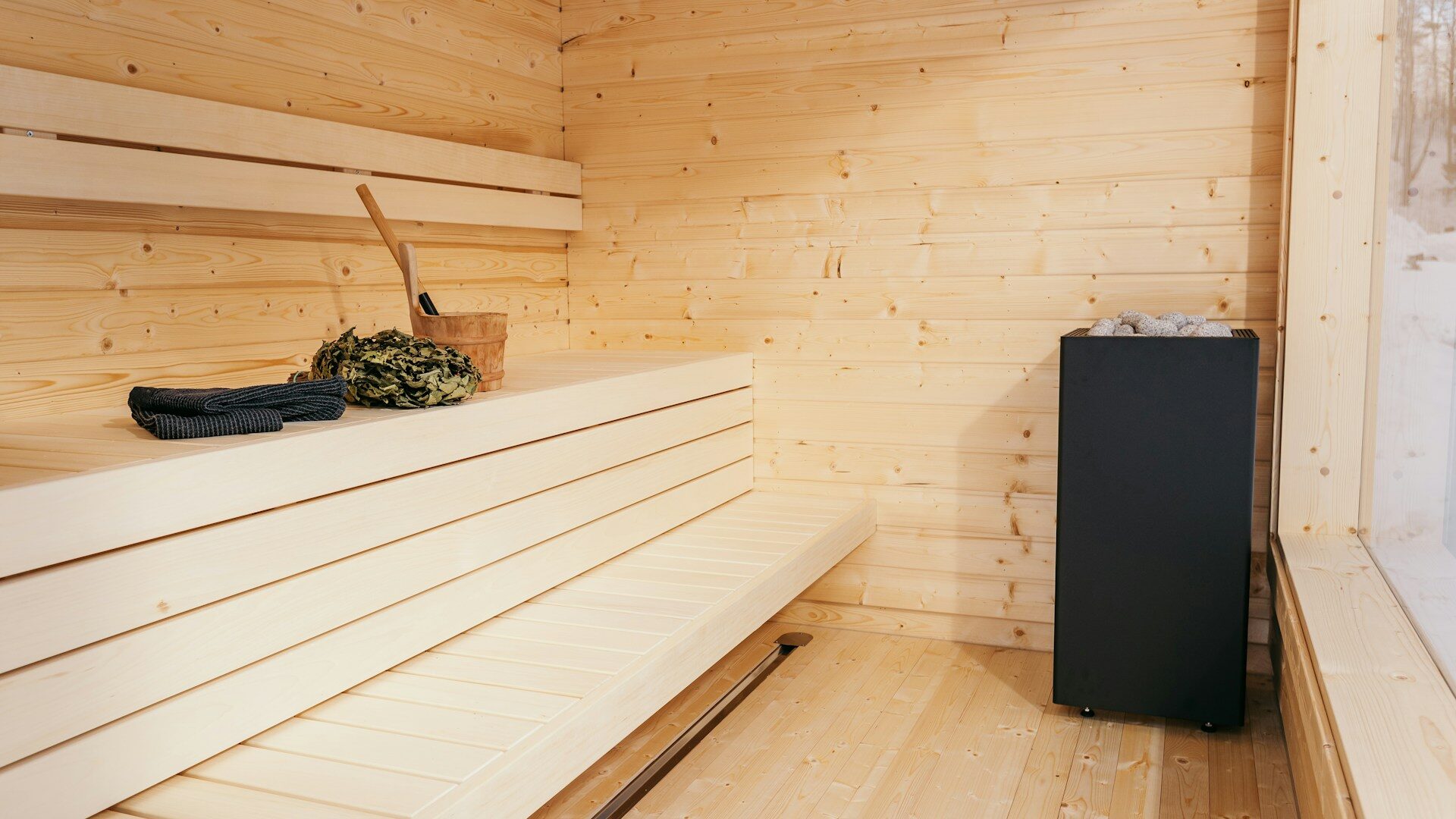
Sauna bathing is popular for stress relief because it combines several calming elements at once: warmth that relaxes muscles, a quiet space away from screens, slow breathing and a predictable ritual. Research suggests regular sauna use is linked with better mood and sleep in many people, and the cooldown afterward often brings a deep sense of calm. It is not a treatment for anxiety or depression, but it can be a helpful part of a healthy routine.
What Happens in Your Body
Heat raises your heart rate and core temperature, which is a mild, controlled stress. Afterward, as you cool down, the body shifts toward its rest-and-digest state, and many people feel relaxed and sleepy. Our article on how your nervous system shifts between stress and rest explains this switch. Warmth also eases muscle tension, which often builds up with stress.
Why the Setting Matters
- No screens: phones do not belong in a hot sauna, so you get a real break.
- Quiet: soft light and silence reduce mental noise.
- Ritual: repeating the same steps signals the brain that it is time to unwind.
- Social time: sharing a sauna with family or friends can feel connecting.
What Research Suggests
| Area | What Studies Suggest |
|---|---|
| Mood | Many users report feeling calmer and happier after sessions |
| Sleep | Evening sessions are linked with easier sleep for some people |
| Muscle tension | Heat relaxes tight muscles |
| Long-term wellbeing | Frequent users in Finnish studies report good wellbeing |
| Depression | Early research on heat therapy is interesting but still limited |
See the connection between sauna use and better sleep for more detail.
A Calming Session Routine
- Drink a glass of water and leave your phone outside.
- Sit or lie on a lower bench for 10 to 15 minutes at a comfortable heat.
- Breathe slowly through your nose, with longer exhales than inhales.
- Step out and cool down gradually with a lukewarm or cool shower.
- Rest for 5 to 10 minutes wrapped in a towel.
- Repeat once if you like, then rehydrate.
New to sauna? Start with our guide on beginner sauna temperature and session length.
Best Times for Stress Relief
Evening sessions, one to two hours before bed, are popular for winding down. A short session after work can also act as a clear line between the workday and home life. Read the best time of day to use a sauna for more options.
Safety Notes
Stress relief should never come with risk. Skip alcohol, stay hydrated and leave if you feel dizzy. Anyone with heart conditions, low blood pressure or pregnancy should check with a doctor before using a sauna. If stress, anxiety or low mood affects daily life, talk to a healthcare professional.
Breathing Techniques to Use in the Sauna
Slow breathing is one of the easiest ways to turn a sauna session into real stress relief. Heat already nudges you to slow down, and controlled breathing adds to that effect. Keep each technique gentle, and stop if you feel lightheaded.
| Technique | How to Do It | How Long |
|---|---|---|
| Long exhale breathing | Breathe in for 4 counts, out for 6 to 8 counts | 3 to 5 minutes |
| Box breathing | In for 4, hold 4, out for 4, hold 4 | 2 to 4 minutes |
| Belly breathing | Hand on belly, let it rise on the inhale and fall on the exhale | Whole session |
| Counting breaths | Count each exhale from 1 to 10, then start over | Whole session |
Breathing through the nose helps warm and slow the air, which many people find more comfortable in dry heat. In a very hot sauna, avoid long breath holds, since heat already raises your heart rate.
Building a Weekly Sauna Habit
Stress relief tends to build with regular use. Finnish studies that link sauna bathing with better wellbeing often involve people who use a sauna several times a week, not once in a while. You do not need to match that right away, but a steady routine makes a difference.
- Beginners: two sessions a week of one or two short rounds.
- Regular users: three or four sessions a week, often in the evening.
- Busy weeks: one short session can still act as a reset.
Pick fixed days, such as Monday, Wednesday and Saturday, so the habit does not depend on willpower. Pairing the sauna with something you already do, like a workout or a weekend shower routine, makes it easier to keep.
Infrared vs Traditional Sauna for Relaxation
Both types can help you unwind, but they feel different. A traditional sauna heats the air to high temperatures and often includes stones for steam, giving an intense, enveloping warmth. An infrared sauna runs at lower air temperatures and warms the body more directly, which many people find gentler and easier to stay in for longer. If very hot air makes you feel anxious or uncomfortable, an infrared sauna may suit you better for stress relief. If you enjoy a strong heat followed by a dramatic cooldown, a traditional sauna may feel more satisfying.
There is no single right choice. The best sauna for relaxation is the one that feels calming to you and that you will use often.
Small Additions That Make Sessions More Calming
- Dim lighting: soft, warm lights help the space feel restful.
- Natural scents: a few drops of eucalyptus or birch essential oil in the water bucket of a traditional sauna, if the maker allows it.
- Quiet sound: silence works well, but low music or nature sounds from outside the sauna can help some people.
- A cooldown spot: a chair, robe and glass of water ready for after the session.
- No clock watching: use a sand timer or a simple timer outside the door so you are not checking a phone.
These details sound small, but they help your brain link the sauna with rest. Over time, simply stepping inside can start to feel calming.
When the Sauna Is Not the Right Tool
A sauna can be a lovely part of a stress relief routine, but it is not right for every person or every day. If you feel unwell, have been drinking, are very dehydrated or have just finished an exhausting workout in hot weather, skip the session. People who feel claustrophobic in small, hot spaces may find a sauna adds stress instead of easing it. In those cases, a warm bath, a gentle walk outside, a stretching session or a few minutes of slow breathing on the couch can offer similar calm without the heat. The goal is to give your body and mind a break, and the best method is the one that feels truly restful to you. A sauna works best as one option in a wider toolkit that also includes good sleep, time outdoors, movement and connection with people you care about.
Final Thoughts
The sauna works as a stress reliever because it pulls you away from screens, warms tight muscles and guides your body into a calmer state afterward. Keep sessions moderate, make it a ritual and enjoy the quiet.
FAQs
Does a sauna reduce stress?
Many people feel calmer after sessions. Heat, quiet and routine all help.
How long should a relaxing sauna session be?
About 10 to 15 minutes per round. Rest between rounds.
Is an evening sauna good for sleep?
For many people, yes. Finish one to two hours before bed.
How often should I use a sauna for stress relief?
Two to four sessions a week works well for many people. Regular use tends to matter more than long or very hot sessions.
Can I meditate in a sauna?
Yes, simple breathing or body scan meditation fits well. Keep it short and leave if you feel dizzy or too warm.










Write Your Review
No reviews yet. Be the first to share your experience!