

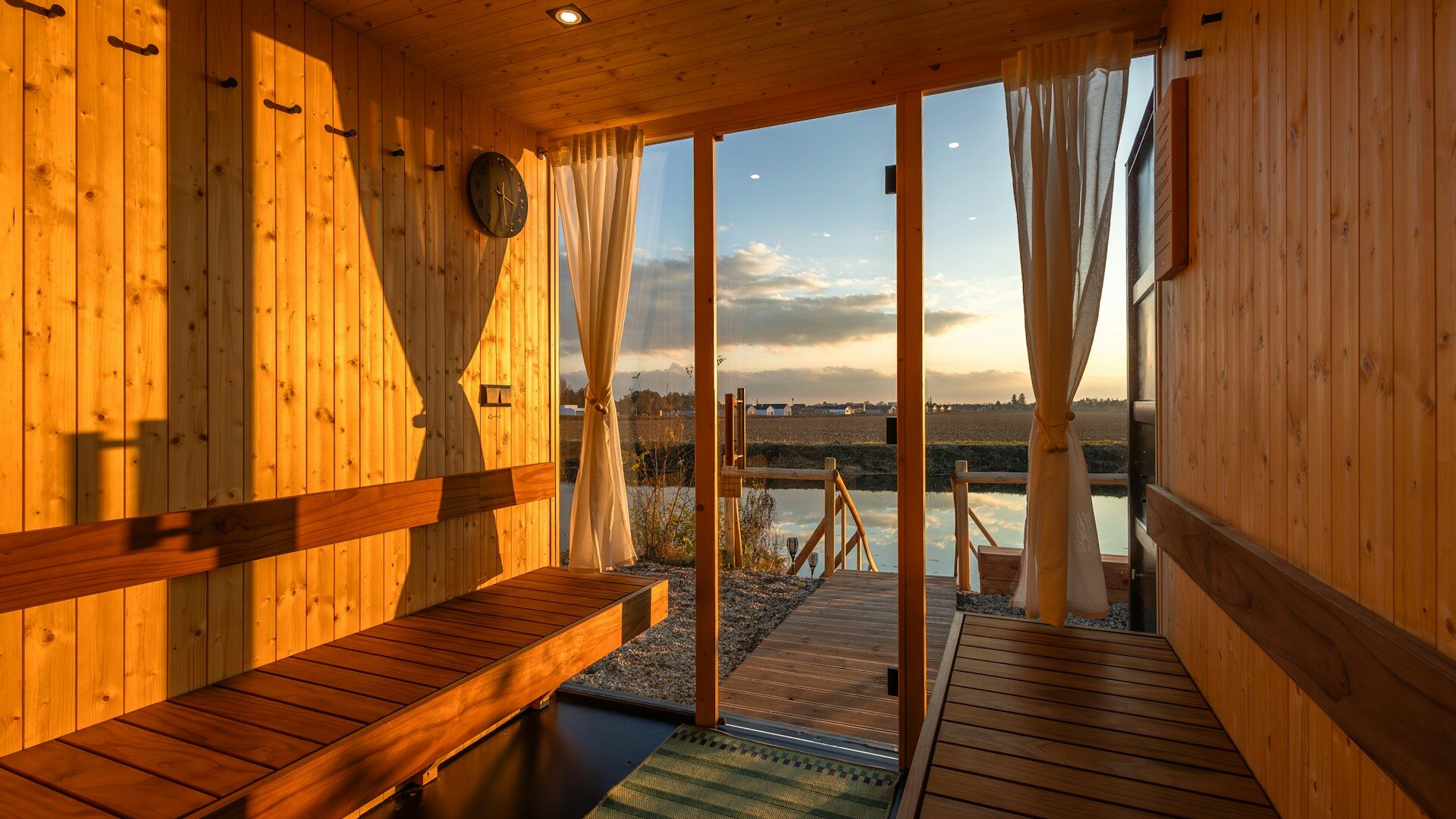
Infrared saunas are not automatically safer than traditional saunas. They run at lower air temperatures, which many people find easier to tolerate, but sessions are often longer, so total heat load can be similar. Both types are generally safe for healthy adults who stay hydrated, limit session length and leave if they feel unwell. People with heart conditions, low blood pressure or pregnancy should check with a doctor before using either type.
How They Heat You
Traditional saunas heat the air, often to around 160 to 195 degrees Fahrenheit, and that hot air warms your body. Infrared saunas use panels that warm your body more directly while the room stays cooler, often around 120 to 150 degrees. Learn more in infrared vs traditional sauna.
Safety Factors Compared
| Factor | Infrared Sauna | Traditional Sauna |
|---|---|---|
| Air temperature | Lower | Higher |
| Typical session | Often longer | Often shorter |
| Burn risk from surfaces | Low, panels can be warm | Hot stones and heater need care |
| Breathing comfort | Easier for some people | Hot air can feel intense |
| Dehydration risk | Real with long sessions | Real with long sessions |
The Myth of Lower Heat, Lower Risk
Because infrared rooms feel milder, people sometimes stay much longer. Your core temperature still rises, you still sweat and you can still become dehydrated or lightheaded. What matters is how your body responds, not just the number on the thermostat. Our guide on how your body regulates temperature in a sauna explains the process.
What About EMF?
Some people worry about electromagnetic fields from infrared panels. Many makers sell low-EMF designs, and everyday exposure from home electronics is common. There is no clear evidence that typical sauna EMF levels harm healthy users, but choosing a reputable brand with published measurements is a reasonable step if it gives you peace of mind.
Who Might Prefer Each Type
People who find very hot air hard to breathe often prefer infrared, since the room stays cooler while the body still warms. People who enjoy the classic feel of heat and steam, including pouring water on stones, tend to prefer traditional saunas. Neither choice is the safe one or the risky one; the safer sauna is the one you use sensibly, with reasonable sessions and good hydration. If you are deciding between them for a home build, our home sauna guides compare space, power and upkeep.
Safety Rules for Any Sauna
- Start with short sessions, around 10 to 15 minutes, and build up.
- Drink water before and after; see how much water you need on sauna days.
- Skip alcohol before and during sessions.
- Leave right away if you feel dizzy, nauseous or unwell.
- Check with your doctor if you have heart or blood pressure concerns or are pregnant.
For beginners, the right sauna temperature and session length is a good starting point.
Final Thoughts
Infrared saunas feel gentler, but they are not risk-free and longer sessions can add up. Choose the type you enjoy, keep sessions sensible, stay hydrated and listen to your body.
FAQs
Are infrared saunas easier on the heart?
They may feel easier, but both raise heart rate. Check with a doctor if you have heart concerns.
Can you stay longer in an infrared sauna?
Many people do, but total heat still adds up. Build session time gradually.
Is EMF from infrared saunas dangerous?
There is no clear evidence of harm at typical levels. Low-EMF models are available.








Write Your Review
No reviews yet. Be the first to share your experience!