

If you are planning a home sauna, the first big choice is infrared or traditional. Both leave you warm, relaxed and sweaty, but they create heat in different ways. That changes the temperature, the feel, the setup and the cost of running one.
How Each Type Heats You
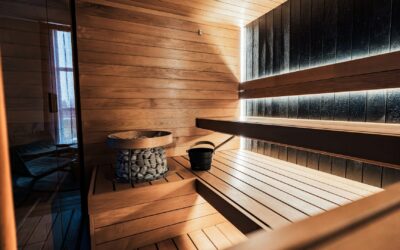
Traditional saunas use an electric or wood-burning heater, usually with stones on top. The heater warms the air, and the hot air warms you. Pouring water on the stones adds bursts of steam called löyly.
Infrared saunas use panels that give off infrared light. The light warms your skin and body more directly, while the air stays cooler.
Side-by-Side Comparison
| Factor | Traditional | Infrared |
|---|---|---|
| Typical air temperature | About 150 to 195°F | About 110 to 150°F |
| Warm-up time | Often 30 to 60 minutes | Often 10 to 20 minutes |
| Feel | Intense, enveloping heat | Gentle, deep warmth |
| Steam | Yes, with water on stones | No |
| Typical session | 10 to 20 minutes | 20 to 30 minutes |
| Power | Often a dedicated circuit | Small units may use a standard outlet |
Who Prefers a Traditional Sauna
- People who love strong heat and a classic Finnish-style session
- Anyone who wants steam and the option to add humidity
- Households planning an outdoor barrel or cabin sauna
- Contrast therapy fans who like a hard heat before a cold plunge
Who Prefers an Infrared Sauna
- People who find very hot air hard to breathe or uncomfortable
- Apartment and small-home owners, since many units are compact and plug-in
- Anyone who wants a quick warm-up for short daily sessions
- Beginners easing into heat therapy
Our picks for 2-person infrared saunas are a good starting point if infrared fits your space.
What About Health Benefits?
Much of the long-term research on sauna bathing comes from Finland and uses traditional saunas. Infrared saunas have fewer long-term studies, though smaller studies suggest benefits for relaxation and how muscles feel after exercise. Both raise heart rate and make you sweat, so both need the same safety habits: water, moderate time and leaving if you feel unwell.
Setup and Upkeep
Traditional saunas usually need more planning for power, ventilation and sometimes a floor that can handle water. Infrared saunas are often simpler to place indoors. Both need basic wood care and cleaning. See our guide on how much space a home sauna needs before you buy.
Think about who will use it, too. If one person in your home loves intense heat and another prefers something gentler, a traditional sauna lets you adjust by sitting on a lower bench or skipping the steam, while infrared stays gentle for everyone. Trying both types at a local gym or spa before you buy is a simple way to learn which feel you enjoy.
Final Thoughts
Choose a traditional sauna if you want strong heat, steam and a classic experience. Choose infrared if you want gentler warmth, faster warm-up and an easier indoor setup. Neither is wrong, and the best one is the one you will use often.
FAQs
Is an infrared sauna as good as a traditional sauna?
It offers a different experience, not a worse one. Traditional saunas have more long-term research, while infrared saunas are gentler and easier to use at home.
Which sauna is cheaper to run?
Infrared saunas usually use less energy per session. They run at lower temperatures and warm up faster.
Can you add steam to an infrared sauna?
No, infrared saunas are dry. If you want steam, a traditional sauna with stones is the better choice.








Write Your Review
No reviews yet. Be the first to share your experience!