

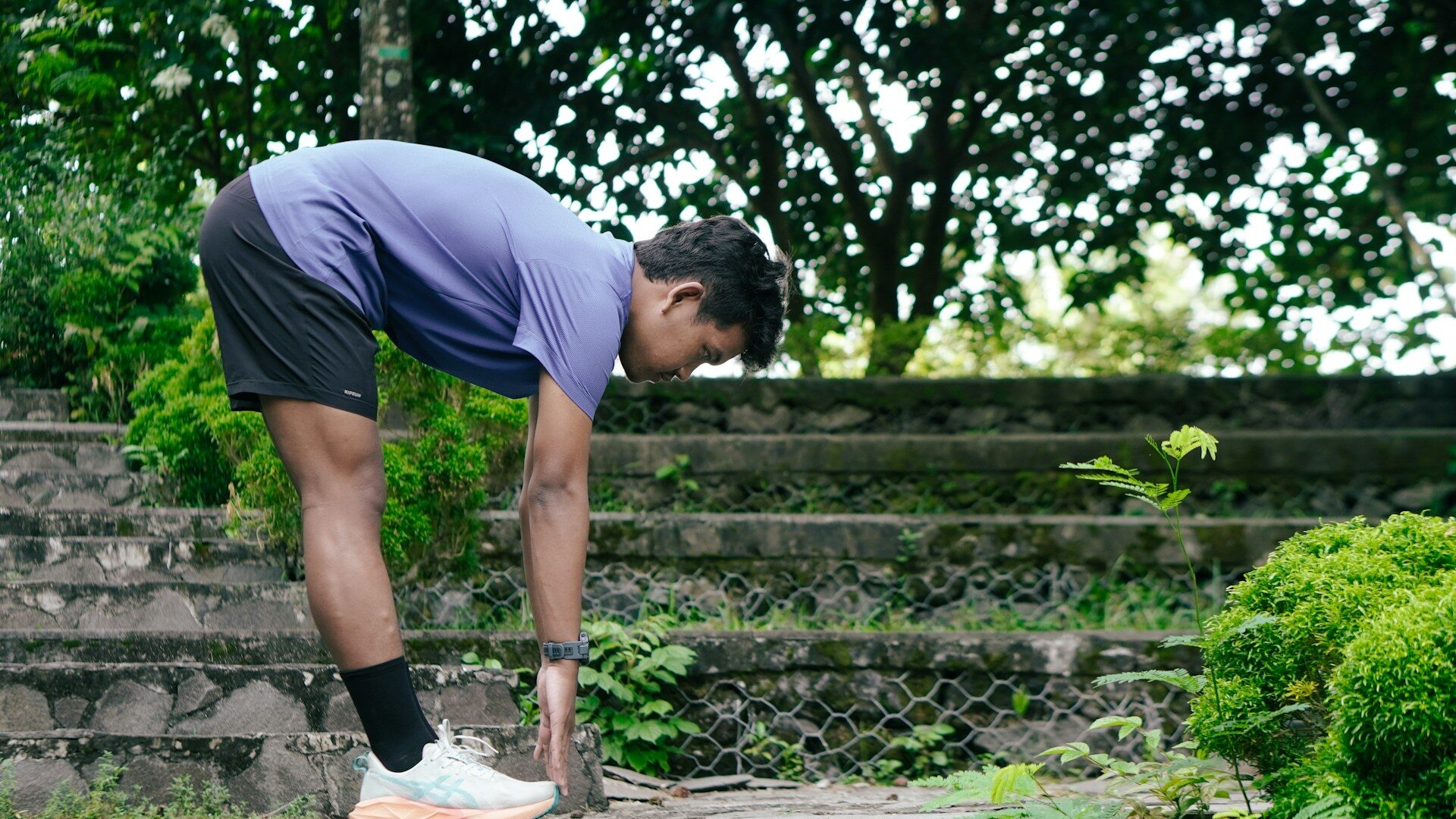
Delayed onset muscle soreness, or DOMS, is the aching and stiffness that shows up 12 to 24 hours after unfamiliar or intense exercise, usually peaks around 24 to 72 hours, and fades within about a week. It is linked to small amounts of muscle fiber stress and the repair process that follows, especially after lowering movements like downhill running or the lowering phase of a squat. It is a normal response, not a sign of injury.
Why DOMS Happens
When muscles work in ways they are not used to, tiny areas of stress appear in the muscle fibers and surrounding tissue. The body responds with inflammation and repair, which makes the area feel tender and stiff. Lowering, or eccentric, movements cause the most soreness. With repeated training, the same workout causes much less soreness, often called the repeated bout effect. Learn more in what happens to your muscles during recovery.
DOMS vs Injury
| Sign | DOMS | Possible Injury |
|---|---|---|
| Timing | Starts hours later, peaks in 1 to 3 days | Often sudden, during activity |
| Feeling | Dull ache, stiffness, tender to touch | Sharp, stabbing or localized pain |
| Movement | Eases as you warm up | Worsens with movement |
| Swelling or bruising | Usually none | Can be present |
| Duration | Improves within about a week | Lingers or worsens |
What Helps It Feel Better
- Gentle movement: easy walking, cycling or swimming.
- Heat: a warm shower, bath or sauna session.
- Massage: light massage or a massage gun on low.
- Sleep and food: enough rest, protein and fluids.
- Compression: some people feel better with garments or boots.
These tools mostly improve how muscles feel rather than speeding repair dramatically. See what percussion massage does to sore muscles.
Should You Train Through It?
Light activity is usually fine and often helps. Hard training on very sore muscles can feel awful and may increase injury risk because movement patterns change when you are sore. Shift to easier sessions or train different muscle groups until the worst soreness fades. Rest days are part of the plan; read why inflammation is not always the enemy.
Preventing Severe Soreness
The best way to limit DOMS is to build up gradually. Add new exercises with lighter loads and fewer sets, increase volume over a few weeks and include a warm-up. Expect some soreness when starting a new program; it usually drops sharply after the first couple of weeks.
Why Some Workouts Cause More Soreness
Downhill running, long hikes with steep descents, heavy lowering in strength training and new sports with lots of stopping and jumping tend to cause the most DOMS. A program change, such as more volume, a new exercise or a return after a break, often brings a few sore days too. Knowing which sessions are likely to leave you sore helps you plan easier days afterward instead of being surprised.
When to See a Doctor
Seek medical care if soreness is extreme, comes with dark brown urine, severe swelling or weakness, or does not improve after a week. These can signal problems beyond normal soreness. More body basics are in our body basics section.
Final Thoughts
DOMS is the normal ache that peaks a day or two after new or hard exercise. Gentle movement, heat, massage, sleep and gradual training increases help it pass, while sharp or worsening pain deserves a closer look.
FAQs
How long does DOMS last?
Usually up to about a week, peaking in 1 to 3 days.
Does DOMS mean I built muscle?
Not necessarily. Soreness reflects new stress, not muscle growth.
Can a sauna help with DOMS?
Heat helps many people feel less stiff.








Write Your Review
No reviews yet. Be the first to share your experience!