

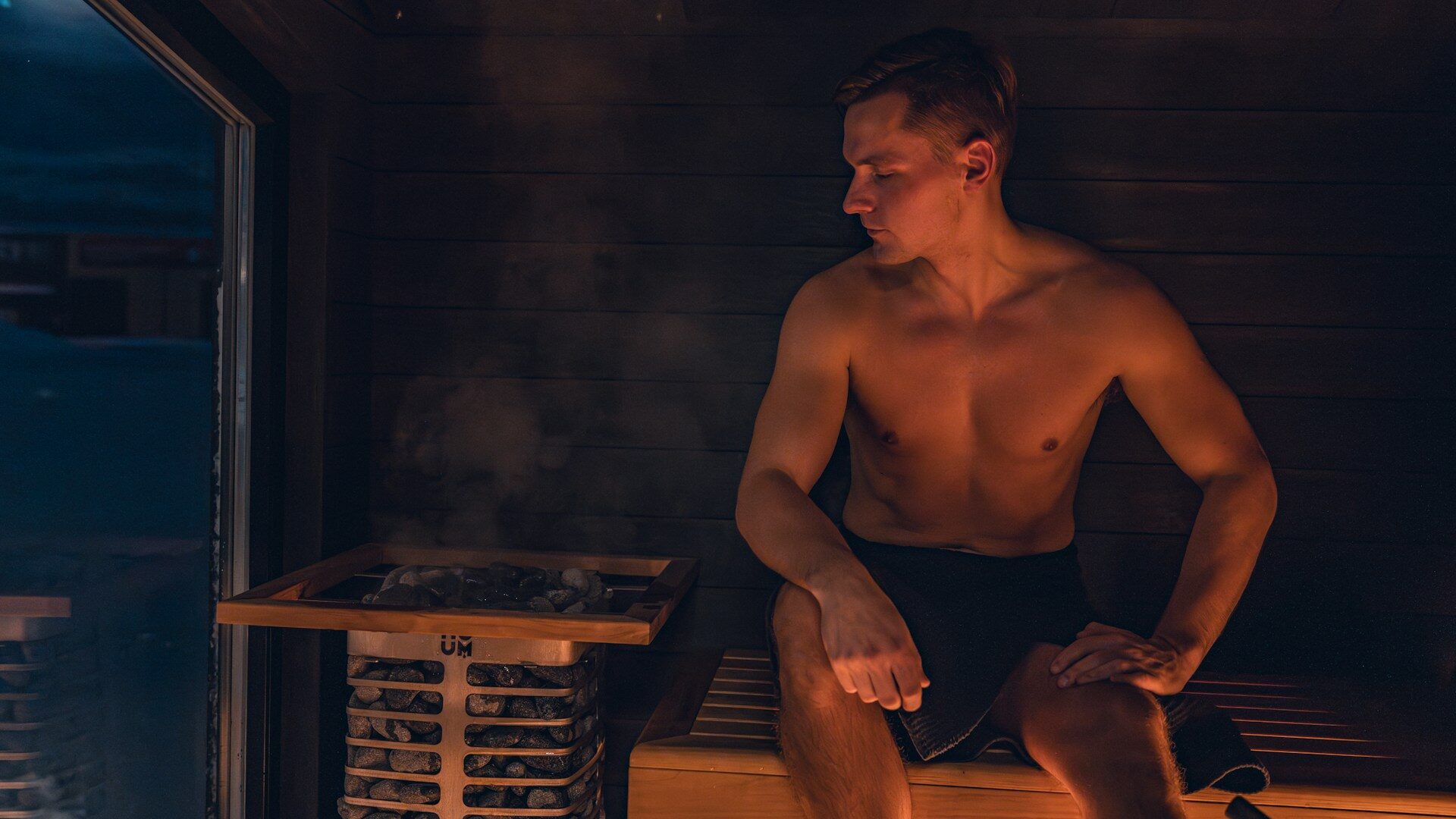
Two sauna sessions at the same temperature can feel completely different. Pour water on the stones and the room suddenly feels much hotter, even though the thermometer barely moves. That is humidity at work. Understanding it helps you choose a safe, comfortable session length for each round. It also explains why a session that felt easy last week can feel much harder when someone else in the room keeps adding water to the stones.
Why Humidity Makes Heat Feel Stronger
Your body cools itself by sweating. When sweat evaporates, it carries heat away from your skin. In dry air, sweat evaporates quickly and cools you well. In humid air, evaporation slows, so less heat leaves your body. Steam also condenses on your skin, releasing extra heat. The result is a much more intense feeling at the same temperature.
Typical Sauna Conditions
| Sauna Type | Temperature | Relative Humidity | Common Session Length |
|---|---|---|---|
| Dry traditional sauna | 175 to 195 F | 5 to 15 percent | 10 to 20 minutes |
| Traditional with steam (loyly) | 160 to 180 F | 20 to 40 percent | 8 to 15 minutes |
| Infrared sauna | 120 to 150 F | Low | 15 to 30 minutes |
| Steam room | 105 to 120 F | Near 100 percent | 8 to 15 minutes |
These are general ranges for healthy adults, not rules.
A Simple Adjustment Rule
Start with the session length that feels comfortable in dry heat. When you add steam, trim the time:
- Light steam (a ladle or two per round): reduce by about 10 to 20 percent.
- Heavy steam (frequent ladles): reduce by about 25 to 40 percent.
Example: if 15 minutes feels right in dry heat, aim for about 12 to 13 minutes with light steam, and about 9 to 11 minutes with heavy steam. Our sauna session calculator gives a starting point you can adjust this way.
How to Measure Humidity
A sauna hygrometer, often combined with the thermometer, shows relative humidity. Mount it at head height, away from the heater, for a reading that reflects what your body feels. Read our guide on how your body regulates temperature in a sauna to understand the cooling process.
Signs to Shorten Your Session
- Breathing feels hard or the air feels sharp in your nose.
- Heart pounding or a headache.
- Dizziness or nausea.
- Feeling like you cannot cool off between rounds.
- Skin that feels prickly or burning rather than just warm.
- Feeling drained for hours after the session ends.
Your heart works harder in humid heat. See what your heart rate does in a sauna, and drink enough water with our sauna day water guide.
Final Thoughts
Sauna humidity makes the same temperature feel much hotter because sweat cannot evaporate as easily. Trim your time by about 10 to 20 percent for light steam and 25 to 40 percent for heavy steam, measure humidity with a hygrometer and leave at the first sign of trouble. Explore more tools in our wellness calculators.
FAQs
Why does pouring water on sauna stones feel so hot?
Steam slows sweat evaporation and releases heat on your skin.
Is a humid sauna better than a dry one?
Neither is better. It comes down to personal preference and comfort.
Should I shorten sessions when adding steam?
Yes. Trim time by about 10 to 40 percent depending on how much steam you add.


Write Your Review
No reviews yet. Be the first to share your experience!