

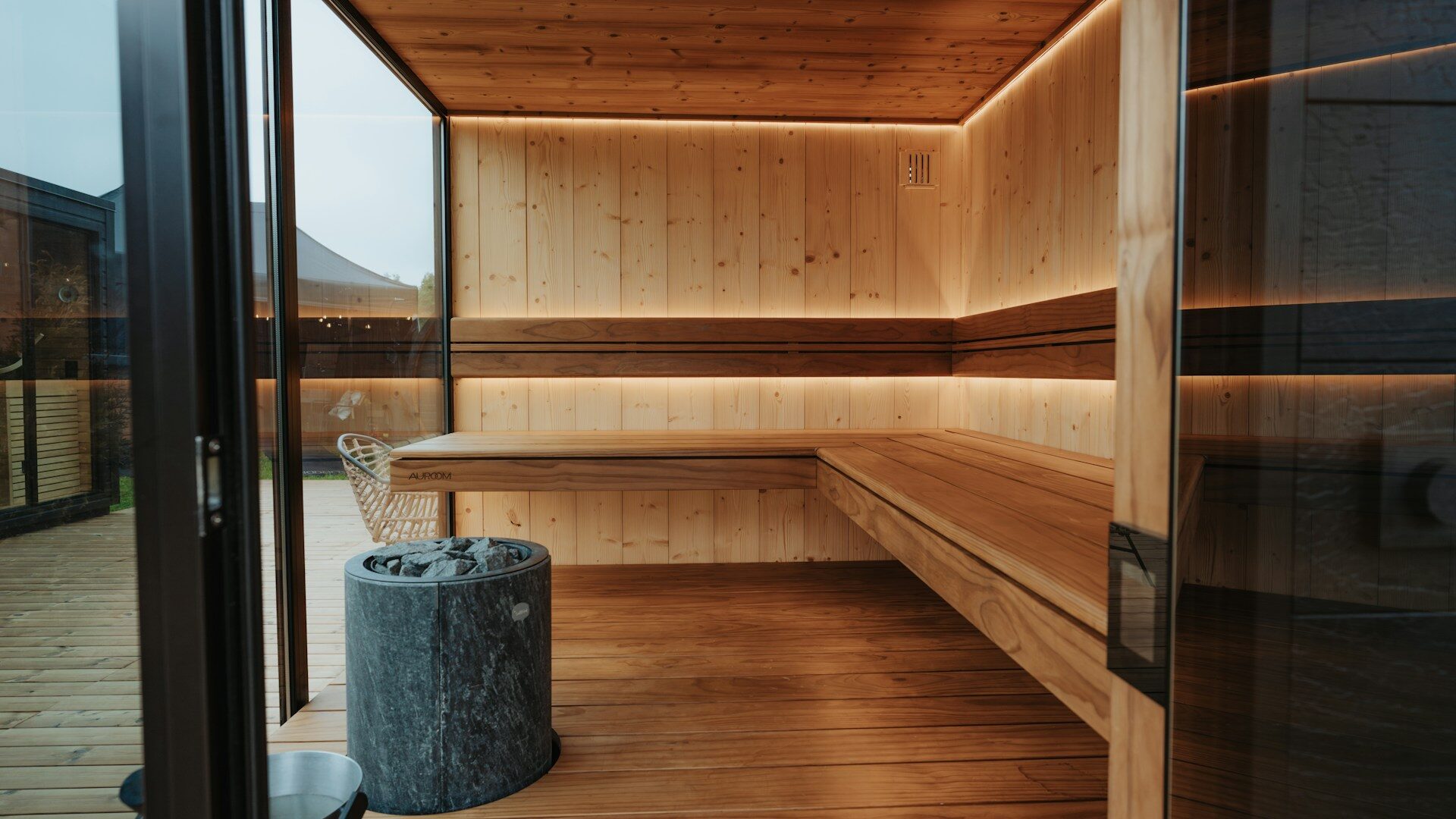
A typical 15 to 20 minute sauna session burns only a modest number of extra calories above resting, because your heart rate rises and your body works to cool itself, but you are not moving. Estimates vary widely by body size, temperature and session length, and the weight you lose on the scale afterward is mostly water from sweat, which returns once you rehydrate.
Why Calories Rise a Little
In the heat, your heart beats faster and blood flow shifts to the skin to release heat through sweat. That extra work slightly increases energy use, similar to very light activity for some people. It is a pleasant side effect, not a replacement for exercise. Learn more in how your body regulates temperature in a sauna.
Sauna vs Light Activities
| Activity, 20 Minutes | Relative Energy Use |
|---|---|
| Sitting quietly | Lowest |
| Sauna session | A bit above sitting |
| Easy walk | Higher than sauna for most people |
| Brisk walk or easy cycling | Clearly higher |
Exact numbers depend on body size and conditions, so treat any figure as an estimate.
Why the Scale Drops
You can sweat a noticeable amount in one session. That fluid loss shows up as lower body weight, but it is not fat. Drinking water afterward restores it within hours. Use the change to plan hydration: each pound lost is roughly 16 ounces of fluid to replace. Our sweat loss calculator helps with the math, and how to track hydration with simple math walks through it.
Using the Sauna Session Calculator
Our sauna session calculator suggests session lengths and temperatures based on your experience and goals. Use it to plan comfortable sessions rather than to chase calorie numbers. Start shorter if you are new, and build up gradually.
Where Sauna Helps Weight Goals
A sauna can support a healthy routine by making recovery feel better, helping you relax and wind down, and encouraging consistency with exercise. Those indirect benefits matter more than the few extra calories burned in the heat.
Better Ways to Burn Calories Around Sauna Days
If burning more calories is a goal, pair the sauna with movement rather than relying on heat. A brisk walk before a sauna, a strength session followed by a relaxing heat session, or an easy bike ride on rest days all add far more energy use than extra minutes in the heat. The sauna then becomes the recovery reward that keeps the routine enjoyable and sustainable.
Safety Reminders
- Drink water before and after each session.
- Avoid alcohol before or during sessions.
- Leave if you feel dizzy, faint or unwell.
- Check with your doctor if you have heart or blood pressure concerns or are pregnant.
Beginners can start with the right sauna temperature and session length.
Final Thoughts
A sauna session burns a few more calories than sitting, but far fewer than walking, and scale changes are mostly water. Enjoy the sauna for relaxation and recovery, and rely on movement and food habits for weight goals.
FAQs
Can a sauna help me lose weight?
Not directly. Weight lost is mostly water that returns after drinking.
Does a hotter sauna burn more calories?
Slightly, but the difference is small. Comfort and safety matter more.
How much water should I drink after a sauna?
Replace what you lost, roughly 16 ounces per pound.



Write Your Review
No reviews yet. Be the first to share your experience!