

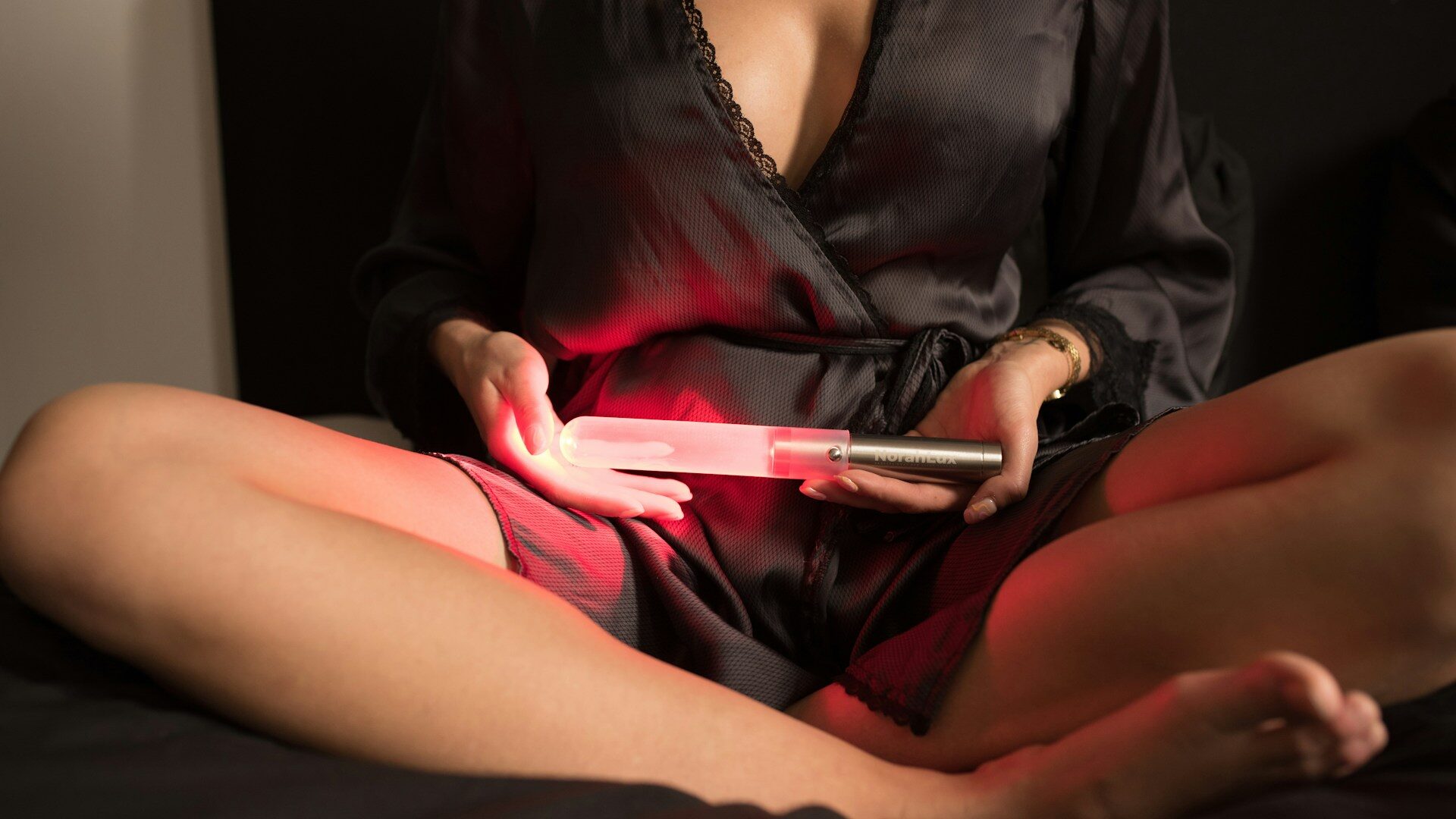
Studies suggest red light therapy may modestly improve skin texture, fine lines and overall appearance over several weeks of regular use, likely by supporting collagen production and cell energy. Some research also points to help with redness and wound healing. Results are usually gradual and subtle rather than dramatic, and they depend on wavelength, dose and consistency. Red light does not replace sunscreen or medical treatment for skin conditions.
How Red Light Interacts with Skin
Red light, usually around 630 to 660 nanometers, is absorbed in the outer layers of skin. Near-infrared light, around 810 to 850 nanometers, reaches deeper. Inside cells, this light is thought to support the mitochondria, the parts of cells that make energy. Researchers believe this may help skin cells called fibroblasts produce more collagen and elastin, the proteins that keep skin firm and smooth. Our article on the science behind red light therapy for muscle recovery explains the same mechanism from a muscle point of view.
What Research Has Looked At
| Skin Goal | What Studies Suggest | Strength of Evidence |
|---|---|---|
| Fine lines and wrinkles | Modest improvement after 8 to 12 weeks | Moderate, several small trials |
| Skin texture and tone | Smoother feel reported by many users | Moderate |
| Redness and irritation | Some calming effect in small studies | Limited |
| Wound healing | May support healing in some settings | Promising, mostly clinical use |
| Acne | Often studied with blue light together | Mixed |
What to Expect at Home
- Timeline: most studies run 8 to 12 weeks with sessions several times per week.
- Size of change: improvements are usually gentle, not like a cosmetic procedure.
- Consistency: skipping weeks tends to slow progress.
- Device differences: home panels and masks vary a lot in power and coverage.
If you are shopping, see what to know before buying a red light therapy panel.
Safety Basics
Red light therapy is generally considered low risk for healthy skin when used as directed. Protect your eyes with the goggles provided, especially with bright panels. Start with short sessions and follow the maker’s distance guidance. People who take medicines that increase light sensitivity, have a history of skin cancer, or have eye conditions should check with a doctor or dermatologist first. Our guide on whether you can overdo red light therapy covers session limits.
Build It into a Skin Routine
- Start with clean, dry skin with no thick creams that could block light.
- Use the panel or mask for the time listed in the manual, often 5 to 15 minutes.
- Apply your usual moisturizer afterward.
- Keep wearing daily sunscreen, since sun damage undoes skin progress.
- Take a photo every few weeks in the same lighting to see real change.
Final Thoughts
Red light therapy has reasonable research behind it for gentle skin improvements, especially texture and fine lines. Treat it as a slow, steady habit alongside sunscreen, sleep and a simple skincare routine, and set expectations for gradual change rather than overnight results.
FAQs
How long does red light therapy take to work on skin?
Many studies show changes after 8 to 12 weeks. Regular sessions matter most.
Is red light therapy safe for the face?
It is generally considered safe when used as directed. Always protect your eyes.
Can red light replace sunscreen?
No. Sunscreen is still essential for protecting skin.









Write Your Review
No reviews yet. Be the first to share your experience!