

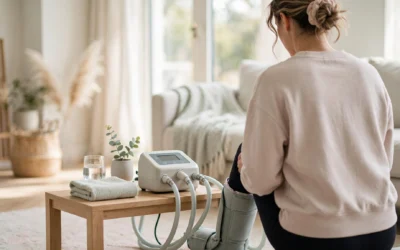
Compression boots may help circulation in tired legs by squeezing in waves from the feet upward, which pushes fluid and blood back toward the heart. Many people report their legs feel lighter and less swollen after a session, especially after long runs, hard training or days on their feet. Medical versions of this technology are used to manage swelling and help prevent blood clots in some patients. Home recovery boots are designed for comfort, not to treat medical conditions.
How Compression Boots Work
The boots have air chambers that inflate one after another, starting at the feet and moving toward the hips. Each chamber squeezes, then releases, creating a wave. This pattern copies how leg muscles naturally pump blood back up the veins when you walk. Our guide on why compression therapy helps with post-workout swelling explains the mechanism in more detail.
What Research Suggests
| Area | What Studies Suggest |
|---|---|
| Leg swelling | Pneumatic compression can reduce fluid buildup |
| Perceived soreness | Some athletes report less soreness and heaviness |
| Blood flow during use | Flow in leg veins increases during compression |
| Performance next day | Mixed results, effects are often small |
| Medical use | Clinical devices help manage some swelling conditions |

Who May Benefit
- Runners and cyclists after long or hard sessions
- People who stand or sit for long hours at work
- Travelers after long flights or drives, once home
- Anyone who enjoys a relaxing, massage-like recovery routine
If you are shopping, our compression boots buying guide covers the features that matter.
How to Use Them
- Lie down or sit with legs slightly raised.
- Start on a low pressure setting.
- Run a session of about 20 to 30 minutes.
- Increase pressure slowly over several sessions if comfortable.
- Drink water and move gently afterward.
Read how to use compression boots the right way after a workout for a fuller routine.
Who Should Check with a Doctor First
Do not use compression boots without medical advice if you have or may have a blood clot, serious vein disease, heart failure, severe artery disease in the legs, open wounds, recent leg surgery or numbness in the legs. Anyone who is pregnant or has diabetes with nerve damage should also ask a doctor first. Sudden leg pain, warmth or swelling in one leg needs medical attention, not compression.
A Note on Weight Loss Claims
Compression boots move fluid, which can make legs look slimmer for a while, but they do not burn fat. Our article on whether compression boots help you lose weight covers this common myth.
Compression Boots Compared With Other Leg Recovery Options
Compression boots are one of several ways to help tired legs feel better. Comparing them with simpler options helps you decide whether they are worth the cost for you.
| Option | How It Helps | Cost | Effort |
|---|---|---|---|
| Legs up the wall | Gravity helps fluid drain toward the heart | Free | Very low |
| Walking | Calf muscles pump blood naturally | Free | Low |
| Compression socks | Steady pressure during the day or travel | Low | Low |
| Massage gun | Eases tight muscles and soreness | Medium | Medium |
| Compression boots | Wave-like squeezing that moves fluid upward | Higher | Low, you just lie down |
Many people get good results combining free habits like walking and raising the legs with a tool they enjoy. Compression boots shine for people who want a hands-off session after hard training or long days on their feet.
What a Session Feels Like
The first session can feel unusual. As each chamber fills, you feel a firm squeeze that moves up your leg, holds briefly and then releases. Many people describe it as a strong, rhythmic hug. At low pressure it feels gentle and relaxing, and some people fall asleep. At higher pressure it feels more like a firm massage. It should never feel painful or cause tingling or numbness. If it does, lower the pressure or stop.
- Wear thin, comfortable pants or use the boots over bare legs.
- Remove jewelry from your ankles and anything bulky from your pockets.
- Make sure the boots are zipped evenly so pressure is balanced.
- Keep your legs straight and relaxed during the session.
Choosing Pressure Settings
Most boots let you set pressure in mmHg, the same unit used for blood pressure. Higher numbers mean a firmer squeeze. Start low and adjust slowly.
- First sessions: start at a low setting to learn how the boots feel.
- Regular use: increase in small steps over several sessions until it feels firm but comfortable.
- After very hard efforts: moderate pressure often feels better than maximum pressure on sore legs.
- Zones: some boots let you set different pressure for feet, calves and thighs. Use less on sensitive areas.
More pressure is not always better. Comfort and relaxation are good signs that the setting suits you.
Using Compression Boots for Work and Travel Fatigue
Not everyone who uses compression boots is an athlete. People who stand all day, such as nurses, teachers and retail workers, often find that an evening session helps their legs feel lighter. Long car rides and flights can also leave legs feeling heavy and puffy. A session once you get home, combined with a short walk and water, is a simple routine. Remember that sudden swelling in one leg, especially with pain or warmth, is a reason to see a doctor rather than use compression.
Caring for Your Boots
Wipe the inside and outside of the boots with a damp cloth and mild soap after use, especially if you use them on bare, sweaty legs. Let them air dry fully before storing. Check hoses for cracks and keep them from kinking. Store the boots flat or loosely rolled, not folded sharply, so the air chambers stay in good shape.
Building Boots Into a Weekly Routine
Compression boots work best as part of a steady recovery habit rather than an occasional treat. Many athletes use them after long runs, hard leg days or tough rides, about two to four times a week. People who stand all day often prefer a short session in the evening while watching TV or reading. Pair each session with water and a little movement afterward, such as a short walk around the house, to keep blood flowing. Keep the boots and pump in a spot that is easy to reach, since gear stored in a closet tends to get used less often. Track how your legs feel the next morning to see which routine suits you best.
Final Thoughts
Compression boots can help tired, heavy legs feel lighter by moving fluid and supporting blood flow during sessions. They are a comfort and recovery tool for healthy people, not a medical treatment. Start gently and check with a doctor if you have any circulation concerns.
FAQs
Do compression boots really improve circulation?
They increase blood and fluid movement during use. Long-term effects are less clear.
How long should a compression boot session be?
About 20 to 30 minutes. Start on low pressure.
Can I use compression boots every day?
Many healthy people do. Stop if you notice pain or numbness.
Should compression boots hurt?
No, they should feel firm but comfortable. Lower the pressure if you feel pain, numbness or tingling.
Are compression boots better than compression socks?
They work differently. Socks give steady pressure during the day, while boots give a stronger, wave-like session while you rest.
Can I use compression boots after a flight?
Many healthy people do, once they are home. Check with a doctor if you have a history of blood clots.




Write Your Review
No reviews yet. Be the first to share your experience!