

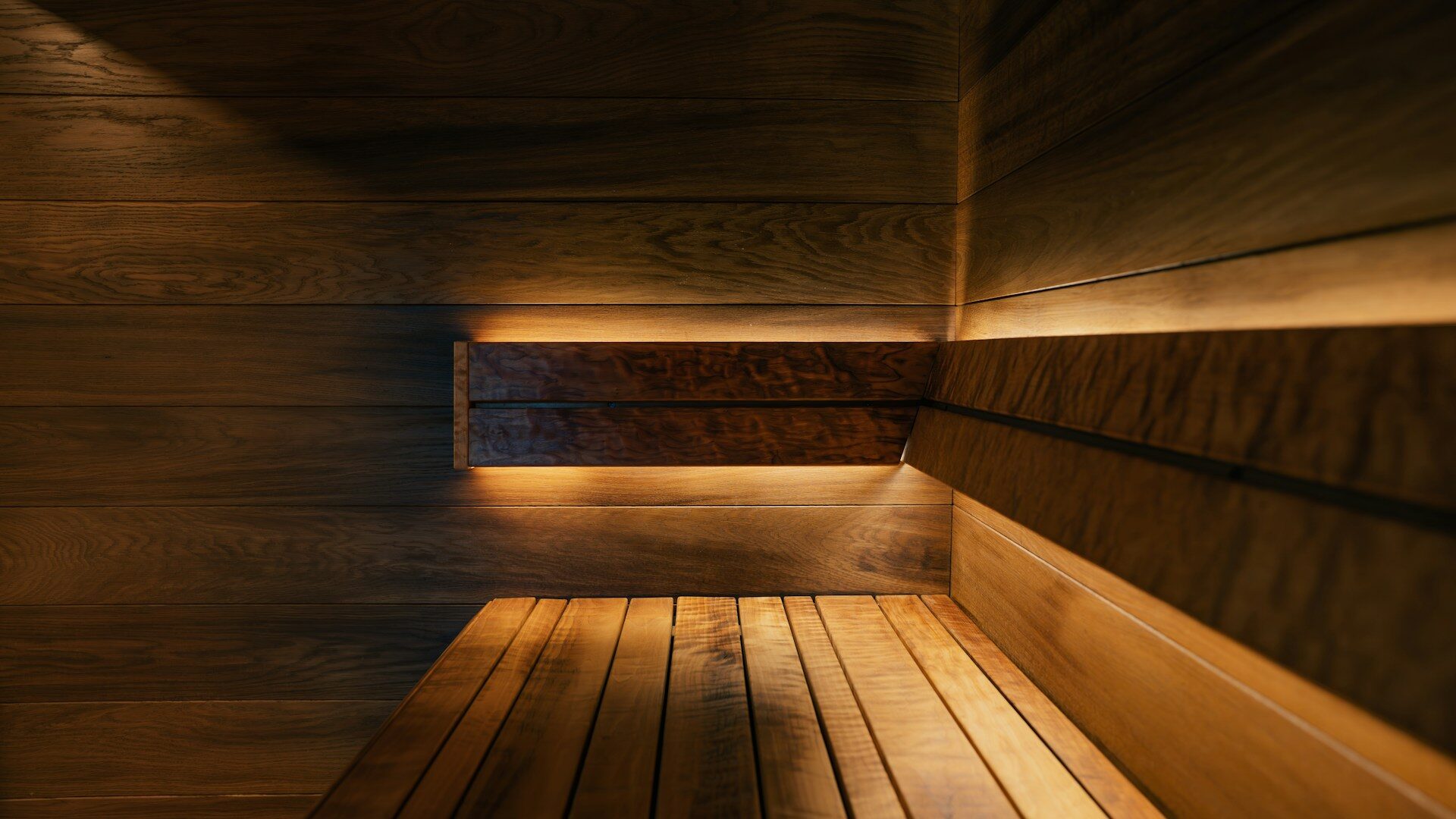
The wood inside a sauna does a hard job. It absorbs heat, sweat and moisture every session, then dries out again. Cedar, hemlock, spruce and basswood handle this well, but they still need some care. With a few simple habits, sauna wood stays smooth, clean and pleasant to sit on for many years.
Why Sauna Wood Needs Gentle Care
Sauna wood is usually left unfinished so it can breathe. That helps it handle heat, but it also means sweat, oils and dirt can soak in. Over time this causes dark spots, rough patches and odors. Harsh cleaners and the wrong finishes make things worse, so the goal is gentle, regular care.
Everyday Habits
- Sit on a towel. It catches most sweat before it reaches the bench.
- Rinse after use. A quick wipe with clean water keeps sweat from setting.
- Let it dry. Leave the door open and the heater on low for a few minutes, or prop the door open after the session.
- Keep shoes out. Grit scratches the floor and benches.
Cleaning Schedule
| How Often | Task | What to Use |
|---|---|---|
| After each session | Wipe benches and backrests | Clean water, soft cloth |
| Weekly | Wash benches and floor | Mild soap or a sauna wood cleaner |
| Monthly | Check for stains and rough spots | Soft brush, fine sandpaper |
| Yearly | Light sanding of benches | Fine grit sandpaper |
Removing Stains and Rough Spots
Dark sweat marks on benches are normal. Light sanding with fine grit sandpaper, following the grain, brings back fresh wood. Wipe away the dust and let the sauna dry before using it. A paste of baking soda and water can lift some marks without sanding. Avoid bleach and strong chemical cleaners, which can damage wood and release fumes when heated.
Finishes: What to Use and What to Avoid
Do not use varnish, regular wood stain or paint inside a sauna. Heat can make them sticky and give off fumes. If you want some protection, use only products labeled for sauna interiors, such as paraffin oil made for sauna benches. Many owners skip finishes entirely and simply sand once a year. Check your maker’s instructions first, since some warranties specify what you can use.
Prevent Mold and Odors
Good airflow is the best defense. Make sure vents are open and the room dries fully after each use. If you smell mustiness, clean with a mild soap solution and dry the sauna on low heat. Our guide on ventilation basics for a home sauna explains how to keep air moving, and simple sauna maintenance covers the heater and stones.
Final Thoughts
Sauna wood care is mostly about small habits: sit on a towel, wipe benches after use, let the room dry and sand lightly once a year. Skip harsh chemicals and standard finishes. Treated this way, your sauna wood stays smooth, clean and fresh-smelling for a long time. Browse our gear care guides for more upkeep tips.
FAQs
Should I seal or varnish sauna wood?
No. Varnish and standard sealers can turn sticky and release fumes in the heat.
How do I remove sweat stains from sauna benches?
Sand lightly with fine sandpaper along the grain. Wipe off the dust and let it dry.
Can I use bleach in a sauna?
It is best avoided. Bleach can damage wood and give off fumes when heated.










Write Your Review
No reviews yet. Be the first to share your experience!