

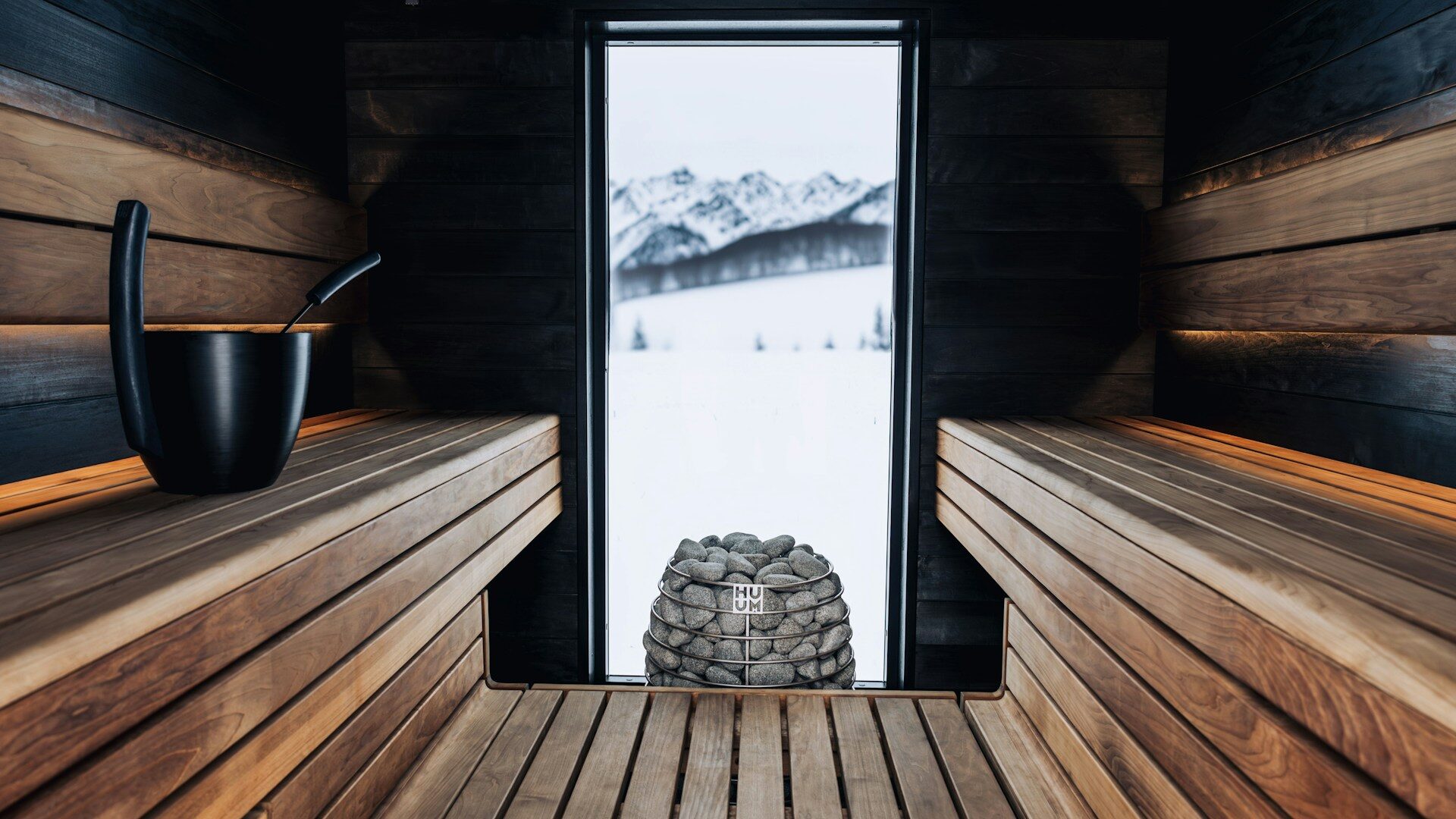
Before installing a home sauna, check its voltage and amperage requirements, because many traditional saunas and larger infrared saunas need a dedicated 240-volt circuit, while some smaller infrared models plug into a standard 120-volt outlet on a dedicated circuit. Have a licensed electrician confirm your panel has room and capacity, install the right breaker and wiring, and handle any permits. Planning the electrical side first avoids surprises after delivery.
120V vs 240V Saunas
| Type | Typical Power Need | Notes |
|---|---|---|
| Small infrared (1 to 2 person) | Often 120V, dedicated circuit | Simplest install, check amp rating |
| Larger infrared (3+ person) | Often 240V | Needs a new circuit on most homes |
| Traditional electric heater | Usually 240V | Heater size sets breaker size |
| Wood-burning sauna | Little or none | Needs chimney and fire clearances instead |
Always follow the exact requirements in the sauna’s manual and spec sheet.
Questions to Answer Before Buying
- What voltage and amperage does the model require?
- Does your panel have open breaker slots and enough capacity?
- How far is the panel from the sauna location?
- Is the sauna indoors, in a garage, or outdoors?
- Does your town require a permit and inspection?
Location planning is covered in how much space you need for a home sauna.
Dedicated Circuits Matter
A sauna heater draws steady power for long periods. Sharing a circuit with other appliances can trip breakers and overheat wiring. Manufacturers typically require a dedicated circuit sized for the heater. Never use extension cords or adapters to run a sauna, even a small plug-in model.
Outdoor and Garage Installs
Outdoor saunas need wiring rated for wet locations, buried or protected conduit and proper weatherproof connections. Garage installs may need GFCI protection depending on local code and the maker’s instructions. An outdoor install also needs a level, well-drained base; see how to design a backyard sauna and cold plunge area.
Plan the Timeline
Electrical work can add days or weeks to a sauna project, especially if a panel upgrade or permit is needed. Get the electrician’s visit on the calendar as soon as you pick a model, and confirm delivery only after the circuit date is set. If your panel is near capacity, the electrician may suggest a load calculation or a subpanel, which is easier to plan before the sauna arrives than after.
Working With an Electrician
- Send the electrician the sauna’s spec sheet and install manual.
- Ask for a quote that includes permits and inspection.
- Schedule the circuit before delivery so the installer can check the sauna right after assembly.
- Keep the documentation with your warranty papers.
Ventilation matters as much as wiring; read ventilation basics for a home sauna.
Final Thoughts
Check the sauna’s voltage and amperage, confirm panel capacity, use a dedicated circuit and let a licensed electrician handle wiring and permits. Electrical planning is the step that makes everything else go smoothly.
FAQs
Can I plug a sauna into a regular outlet?
Only small models designed for 120V, on a dedicated circuit. Check the manual.
Do I need a permit to install a sauna?
Often, for new circuits. Your electrician can confirm local rules.
Can I use an extension cord for a sauna?
No. Saunas need direct, properly sized wiring.










Write Your Review
No reviews yet. Be the first to share your experience!