

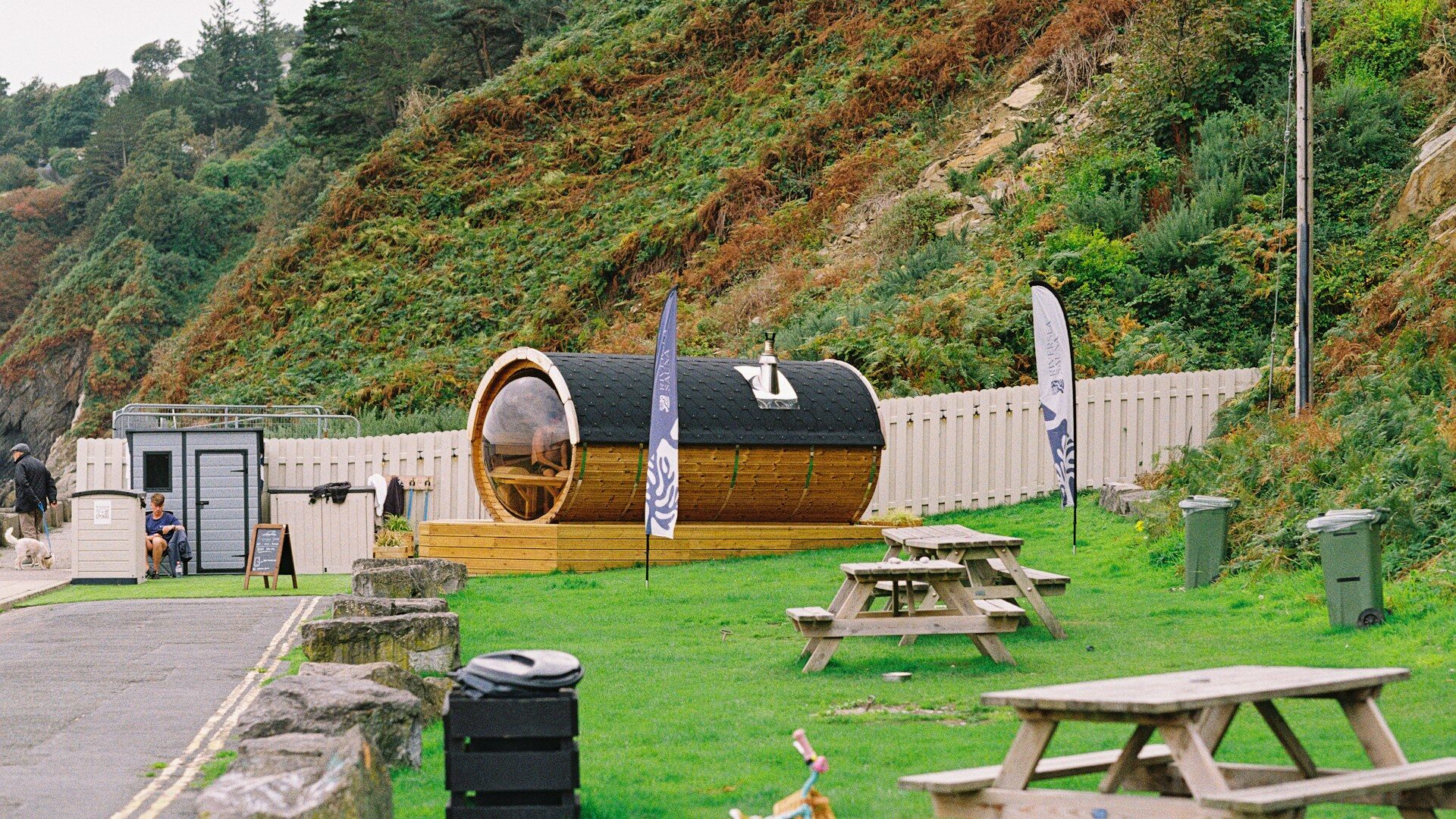
A barrel sauna is usually the better pick if you want fast heat-up, a compact footprint and simple outdoor assembly. A cabin sauna is usually better if you want more seating, a changing area, a window or a shape that blends with a house or deck. Both can work well outdoors. The right choice depends on how many people will use it, how much yard space you have and how often you plan to heat it.
How the Shapes Differ
A barrel sauna is a cylinder of wooden staves held together with steel bands. The curved ceiling means there is less empty air above your head, so the room tends to warm up faster. A cabin sauna is a rectangular room with flat walls and a pitched or flat roof, similar to a small shed. It has more interior volume for the same footprint, which gives more headroom and layout options but takes longer to heat. For a broader overview of sauna types, see our home saunas guide.
Side-by-Side Comparison
| Factor | Barrel Sauna | Cabin Sauna |
|---|---|---|
| Heat-up time | Often faster, less air to warm | Often slower, more interior volume |
| Seating | Two facing benches, usually 2 to 6 people | Flexible layouts, tiered benches possible |
| Headroom | Highest in the center only | Even across the room |
| Rain and snow | Curved roof sheds water well | Needs a proper roof covering |
| Assembly | Staves and bands, often a weekend job | Wall panels or framing, more steps |
| Extras | Small porch on some models | Changing room, windows, storage |
Space and Placement
Barrels have a round profile, so they need a flat, level base that supports the cradles under the staves. A gravel pad, pavers or a concrete slab are common choices. Cabins need a level foundation under the full floor area, and their square footprint makes them easier to tuck against a fence or attach to a deck. Measure door swing, clearance around the heater and the path from your back door before choosing. Our article on how much space you need for a home sauna covers typical sizes.
Heat Feel and Comfort
Many people like how a barrel sauna feels because the heat rolls along the curved ceiling and back down toward the benches. The tradeoff is that taller users may only stand upright in the middle. A cabin with an upper bench lets you choose a hotter or cooler spot by sitting higher or lower, which suits households where people prefer different heat levels. If you plan longer, social sessions with friends, the extra legroom in a cabin can matter more than heat-up speed.
Upkeep Over the Years
Barrel staves expand and contract with the seasons, so the steel bands need to be checked and tightened now and then, especially in the first year. Cabins have more joints and roofing to inspect but fewer moving parts. Both benefit from good ventilation, a clean heater area and periodic wood care. Our guide to caring for sauna wood and our simple sauna maintenance checklist apply to either shape.
Quick Way to Decide
- Choose a barrel if you want quick heat, a classic look and a compact unit for one to four people.
- Choose a cabin if you want a changing area, windows, tiered benches or a sauna that matches your house.
- Snowy climates: barrels shed snow easily, while cabins need a roof built for snow load.
- Tall users: a cabin usually gives more comfortable headroom.
Final Thoughts
Neither shape is better for everyone. Barrel saunas win on heat-up speed, simplicity and weather shedding. Cabin saunas win on space, layout and comfort for larger groups. Start with your yard, your household size and how often you will use it, and the shape usually picks itself.
FAQs
Does a barrel sauna heat faster than a cabin sauna?
Usually yes, for the same heater size. The curved ceiling leaves less empty air to warm.
Can a barrel sauna be used indoors?
It is possible but uncommon. Most barrels are designed for outdoor use, and indoor saunas are usually cabin style.
Which shape holds up better in snow?
Barrels shed snow more easily. A cabin needs a roof rated for your local snow load.








Write Your Review
No reviews yet. Be the first to share your experience!