


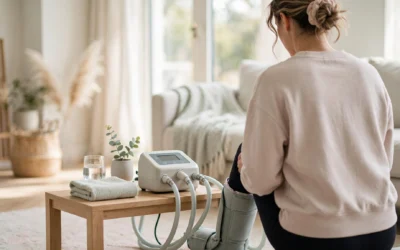
Compression boots have become a popular home recovery tool, and the choices have grown fast. Some are simple, with one mode and a few pressure levels. Others offer many chambers, apps and attachments for hips and arms. This compression boots buying guide explains which features actually change your sessions, so you can spend on what you will feel and skip what you will not.
Key Features Compared
| Feature | What It Means | What to Look For |
|---|---|---|
| Chambers | Separate air sections along the leg | 4 to 6 chambers suit most people |
| Pressure range | How firm the squeeze gets, in mmHg | A wide range with low starting levels |
| Modes | Patterns of inflation | Sequential mode at minimum |
| Zone control | Skip or soften chosen chambers | Useful for sensitive spots |
| Size options | Boot length and width | Match your leg length and calf size |
| Power | Battery or plug-in | Battery for portability, plug-in for home |
| Noise | Pump sound | Quieter pumps suit TV and evening use |
Chambers and Modes
More chambers allow smoother, more gradual waves from feet to hips. Four to six is plenty for most users. Sequential mode, which inflates from the foot upward, is the standard. Extra modes like pulse or wave patterns add variety but are not essential. Zone control is a nice bonus if you have a tender area.
Sizing and Fit
Boots that are too short leave the upper thigh uncovered, while boots that are too long bunch up. Check the height range and calf or thigh width. Taller users may need a long size, and people with larger legs should look for extension panels. A good fit gives even pressure along the whole leg.
Battery or Plug-In?
- Battery models: easy to move around the house and take to events.
- Plug-in models: no charging to remember, often slightly stronger pumps.
If you choose battery power, check run time per charge. Most users want at least two or three sessions between charges.
Features You Can Skip
- App control, unless you love tracking sessions.
- Dozens of preset programs.
- Arm and hip attachments, unless you will truly use them.
- Very high maximum pressures you will never reach.
How to Use and Care for Them
Good habits matter as much as features. Start at low pressure, keep sessions around 20 to 30 minutes and wipe the lining after use. See how to use compression boots the right way and how to clean and store compression boots. To understand the science, read why compression therapy helps with swelling.
Final Thoughts
When buying compression boots, focus on a good fit, four to six chambers, sequential mode, a wide pressure range that starts low and a power type that suits your home. Skip apps and extras unless you know you will use them. Browse our compression boots category to compare options.
FAQs
How many chambers do compression boots need?
Four to six is plenty for most people. More chambers give smoother waves.
Are battery compression boots weaker?
Not necessarily. Some are slightly less powerful, but many work well for home use.
Do compression boots come in sizes?
Yes, most brands offer two or three lengths. Check the height chart before ordering.



Write Your Review
No reviews yet. Be the first to share your experience!